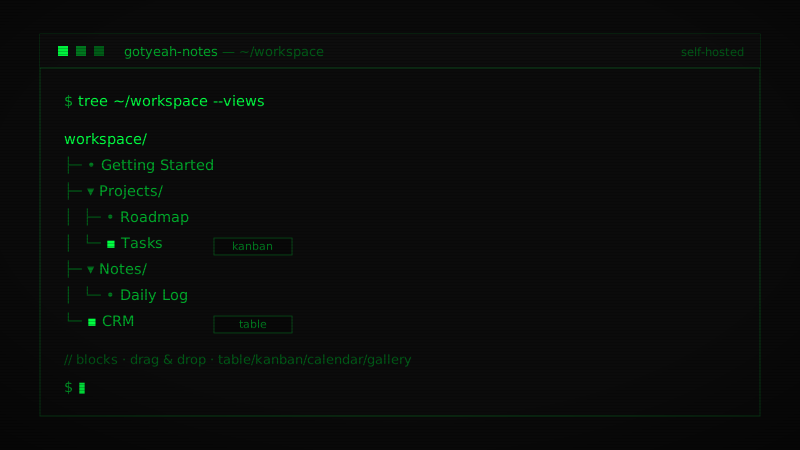
$ cat README.md
Projet né d’un constat : Notion est génial, mais je veux posséder mes données. Donc je le reconstruis, pas tout, juste ce que j’utilise vraiment. C’est aujourd’hui l’outil dans lequel je suis mes projets : boards, sprints, cahiers de test.
Architecture
- Next.js App Router, Server Components par défaut, Server Actions pour les mutations.
- Prisma + SQLite, pour rester portable et auto-hébergeable sans infra lourde, avec des migrations versionnées.
- Modèle de données explicite, aux invariants documentés.
Connexion et collaboration
- SSO GotYeah, la connexion passe par le compte unique GotYeah (OpenID Connect), commun à mes autres outils ; l’ancienne connexion par mot de passe est désactivée.
- Lien de connexion par email, pour les invités externes qui n’ont pas de compte GotYeah.
- Rôles par espace, administrateur, éditeur et lecteur, appliqués par toutes les routes.
- Invitations, y compris pour une adresse qui n’a pas encore de compte, acceptées par l’invité depuis une notification.
- Notifications, cloche dans l’en-tête : invitations, changements de rôle, assignation d’une carte.
Databases et gestion de projet
- Cinq vues, table, kanban, calendrier, galerie et backlog.
- Backlog façon Jira, sprints, épics, story points, un seul sprint actif, notes de version générées à la clôture.
- Propriétés riches, relations entre databases, assignés avec regroupement et filtre « Moi », modèles de cartes à sections fixes, permissions de transition par colonne du kanban.
- Vie des cartes, commentaires, pièces jointes et historique des modifications champ par champ.
- Corbeille, pages et cartes restaurables pendant 30 jours.
Édition et interactions
- Éditeur de blocs BlockNote, sauvegarde automatique, liens internes
@page, images collées depuis le presse-papier. - Drag-and-drop universel, sidebar, lignes de table, cartes kanban via dnd-kit.
- Recherche globale (Cmd+K) sur les pages et les cartes.
- Optimistic updates via SWR, et une interface utilisable sur téléphone.
Pilotage par l’IA et qualité
- MCP, une cinquantaine d’outils pour lire et écrire pages, databases, cartes, sprints et commentaires depuis Claude, via le hub MCP commun à mes outils ; les écritures de l’IA sont signées par un compte dédié.
- Tests, unitaires et API avec Vitest, parcours de bout en bout avec Playwright ; un test rouge bloque la CI.
A project born from a realization: Notion is great, but I want to own my data. So I’m rebuilding it, not all of it, just what I actually use. It is now the tool I track my projects in: boards, sprints, test plans.
Architecture
- Next.js App Router, Server Components by default, Server Actions for mutations.
- Prisma + SQLite, to stay portable and self-hostable without heavy infra, with versioned migrations.
- Explicit data model, with documented invariants.
Sign-in and collaboration
- GotYeah SSO, sign-in goes through the single GotYeah account (OpenID Connect), shared with my other tools; the old password sign-in is turned off.
- Email sign-in link, for external guests who have no GotYeah account.
- Workspace roles, admin, editor and viewer, enforced by every route.
- Invitations, including for an address that has no account yet, accepted by the guest from a notification.
- Notifications, a bell in the header: invitations, role changes, card assignment.
Databases and project management
- Five views, table, kanban, calendar, gallery and backlog.
- Jira-style backlog, sprints, epics, story points, a single active sprint, release notes generated when a sprint closes.
- Rich properties, relations between databases, assignees with grouping and a “Me” filter, card templates with fixed sections, per-column transition permissions on the kanban.
- Card life, comments, attachments and a field-by-field change history.
- Trash, pages and cards can be restored for 30 days.
Editing and interactions
- BlockNote block editor, autosave, internal
@pagelinks, images pasted from the clipboard. - Universal drag-and-drop, sidebar, table rows, kanban cards via dnd-kit.
- Global search (Cmd+K) across pages and cards.
- Optimistic updates via SWR, and an interface that works on a phone.
AI control and quality
- MCP, about fifty tools to read and write pages, databases, cards, sprints and comments from Claude, through the MCP hub shared by my tools; AI writes are signed by a dedicated account.
- Tests, unit and API tests with Vitest, end-to-end journeys with Playwright; a failing test blocks CI.